
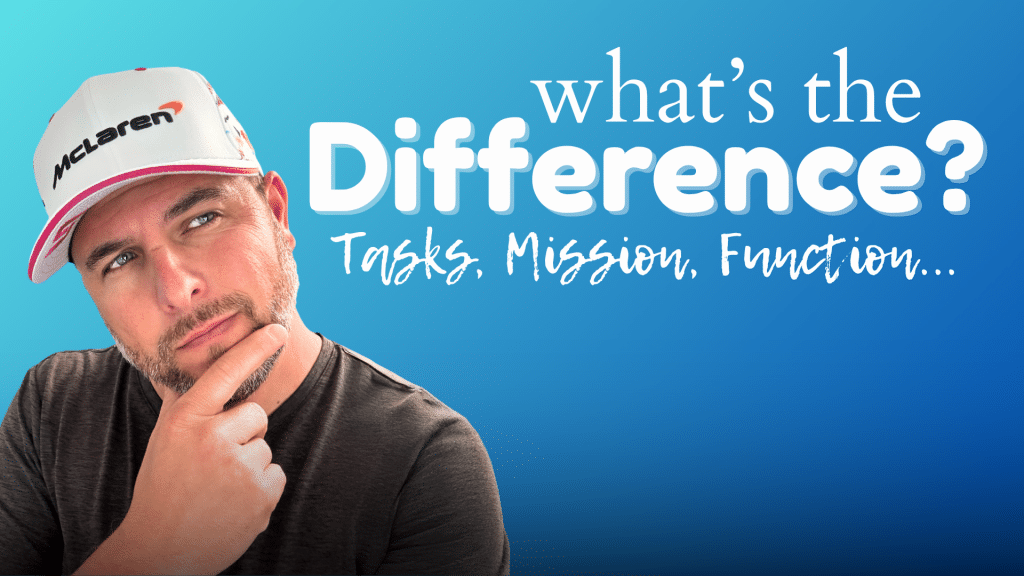
What’s the Difference Between Tasks, Mission & Function in Business?
Many small business owners have a mission, something that drives them. But what about your function? That’s your special role, how you serve people in a way only you can.
In the July 2025 issue of Entrepreneur, Marcus Lemonis of CNBC’s “The Profit” shared a shift in how he sees his role. His new show, The Fixer, isn’t just about solving problems, it’s about preparing others to succeed without him.
The author of the article put it this way: “Lemonis’ role has changed, no longer just to profit, renovate, or fix, but to prepare. To prepare others to succeed without him.” This statement really got me thinking a little deeper, so let’s dive into what this whole “function” idea means for us business owners today.
What’s the Difference Between Tasks, Mission, and Function?
Think of it this way:
- Tasks are what fill your to-do list.
- Mission is the reason you get up in the morning.
- Function is how you help others thrive, in a way that only you can.
I used to think my job was mostly about coming up with strategies, running marketing plans, managing campaigns, creating content, keeping up with new platforms, consulting, and building websites. But that’s just part of my task list.
My purpose (or mission) has always been rooted in helping people improve their marketing so they can connect with the right people and move them to action.
But… what’s my actual function? It’s to equip. Not in the sense of checking boxes or handing off plans, but equipping people to move forward with clarity and confidence.
- To equip others to make confident decisions.
- To equip leaders to simplify their message and take the next right step.
- To equip teams to thrive—with or without me in the room.
You might say I’m a Clarity Catalyst.
Over time, I’ve realized this kind of equipping isn’t about control; it’s about empowering others to move forward without needing me at every step.
Like Lemonis, this shift in mindset doesn’t happen overnight. It comes with experience, reflection, and a willingness to see your role differently. This is something worth passing on to the next generation of leaders. Because the sooner someone understands their function, the sooner they can serve with clarity, without wasting years chasing roles they were never meant to fill.
Why is function more important than ever in an AI-driven world?
With AI tools evolving fast and digital content constantly flooding our spaces, here’s the truth:
The more automated the world becomes, the more your humanity will matter. Your voice. Your story. Your experience.
Recently, a client asked for my take on AI. My response:
“AI will push us to become more human.”
I didn’t watch Lemonis’s renovation show, but the article mentioned it flopped. Why? Because people didn’t need him for that. They needed someone who could speak truth, challenge them, and prepare them for the next step in business.
His wife told him:
“Don’t do something everyone else can do. Do what only you can do.”
That’s what function is.
How Can Small Business Owners Discover Their Function?
Here’s a simple challenge for you. This week, make time to reflect on your function.
Ask yourself:
- Where do I bring the most value to others?
- What do people come to me for?
- What kind of work energizes me?
- Am I operating outside of my function?
Once you get clarity on your function, you’ll probably find yourself chasing trends less as you focus more on what you were created to do because the goal of leadership isn’t always to be needed. It’s to leave others better equipped after you’re gone. And your function helps you do that.
More Related Questions
Q) How can teams operate better when each person knows their function?
A) When everyone understands their function, they stop competing for the same space.
Q) What are examples of common business functions beyond job titles?
A) This could include strategist, encourager, guide, connector, challenger, preparer, etc.
Q) How can I lead a business when I’m not great at everything?
A) You don’t need to be great at everything. Focus on recognizing and leaning into your function, then build around it.
Q) How do I know if I’m operating in my true function?
A) You’re likely operating in your function when people consistently seek you out for a certain kind of help, and you feel energized (not drained) by doing it. Your function often shows up in patterns, not job descriptions.
Q) Can my function change over time?
A) Your function often becomes clearer over time, but it rarely changes at its core. As your experience grows, how you live it out may shift, and that’s why I would say it becomes clearer over time.
Q) How can I align my team’s roles with their function?
A) Start with an honest conversation. Ask your team what work gives them energy, where they feel most useful, and where others rely on them most. Match responsibilities to those natural strengths whenever possible.
Q) How does understanding function improve business longevity and culture?
A) When everyone understands their function, people stop competing and start contributing. It creates clarity, reduces burnout, and builds a culture of ownership. Making your business stronger, healthier, and more resilient.
Written by Brian Curee, CEO of Killer Bee Marketing. Helping small businesses grow with clarity, confidence, and strategy.
This article is grounded in our own experiences, reflections, and insights. AI tools may assist with research or drafting, but every piece is reviewed, shaped, and published with human discernment.
ℹ️ Please keep the comments free of promotions or sales pitches. Any comments containing such content may be marked as spam or edited before publishing.
You may also like







Together, Let's Transform Your Marketing
Clarity • Connection • Confidence

Schedule a
Discovery Call
Let’s discuss and uncover your biggest marketing challenges and goals.
Identify the Right
Support Path
Together, we’ll build a focused, message-driven marketing plan.
Move Forward
with Confidence
Implement the strategy and watch your brand connect and expand.